This exhibition explores Riot Grrrl’s global legacy of DIY artistic expression, community-building, and resistance. Presented by Daisy Chain Fields
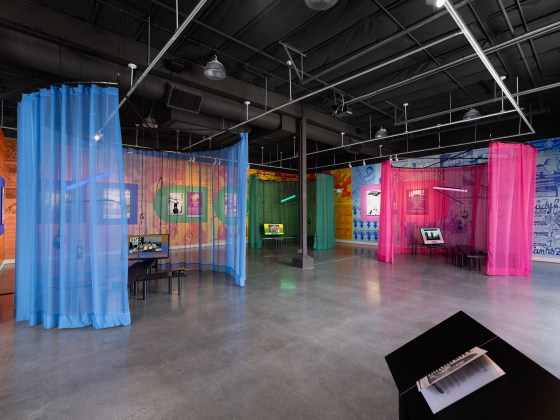
This exhibition explores Riot Grrrl’s global legacy of DIY artistic expression, community-building, and resistance. Presented by Daisy Chain Fields

Upcoming & recent exhibitions, performances, screenings, projects, publications.
(Updated Sept. 2026)
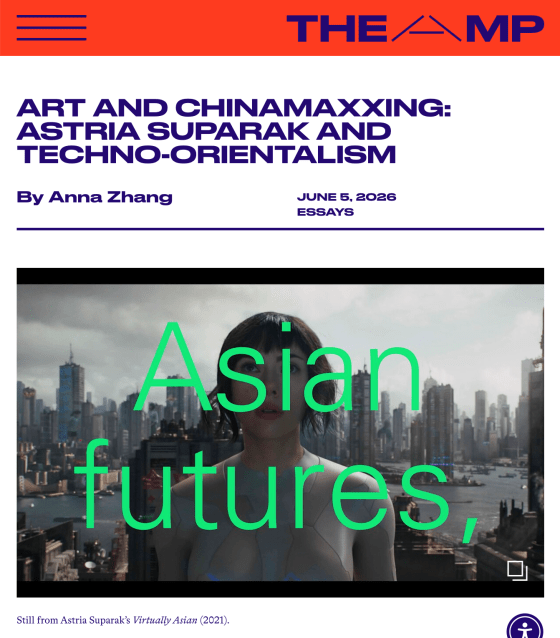
“In her ongoing series ‘Asian Futures’, artist and curator Astria Suparak unpacks this tendency of American media to borrow from Asian culture while simultaneously marginalizing actual Asian people.”
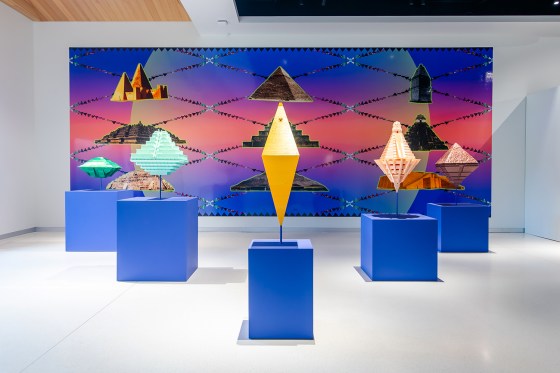
This suite of sculptures and a wall piece draws upon imagery from sci-fi where pyramids signal an alien or futuristic world. Hovering over these fabrications and projections are the real-life pyramids conceived, designed, and built by humans living across ancient Latin America, Africa, and Asia.
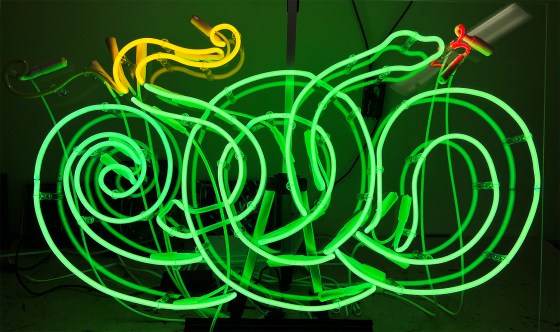
An animated neon snake inspired by an inaccurate and mislabeled 18th-century French naturalist illustration.
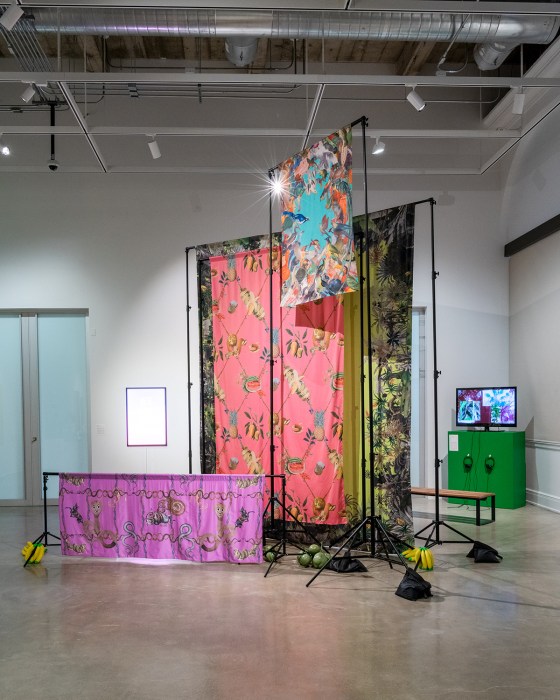
“In this towering installation, Suparak constructs a sprawling set shaped by centuries of imperial fantasy… Snakes coil around prey; a throng of brightly feathered birds erupts into flight above, while fanciful fruits swell into bloated cornucopias.”
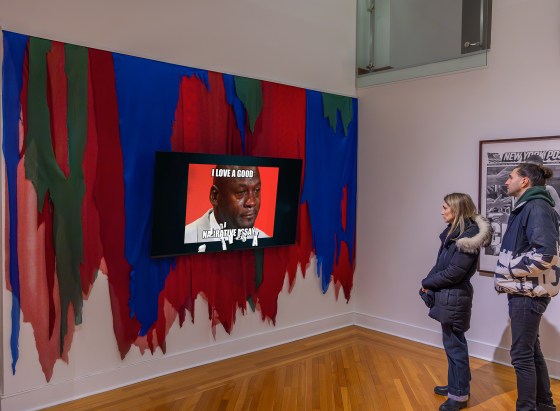
An RGB sports jersey version of a Clyfford Still canvas, looking like ripped remains of an on-court battle.

“I spoke to Suparak about […] how sports and the arts are not mutually exclusive sources of inquiry and criticism of our political and cultural spheres.”

Spanning pre-cinema to post-internet, this six-part screening & performance series at the Walker Art Center challenges the idea that the worlds of sports and art are mutually exclusive.

A video spotlighting the range and utility of the long-running Crying Jordan meme, which re-immortalizes one of the 20th century’s most successful athletes into an avatar of failure; an Everyman for disappointment, angst, and sorrow; a tool for rapid responses to live events; and a demonstration of the increased power of (anonymous, decentralized) fan culture.

“The sports film genre—as it has come to be defined through its codes, scholarship, production and screening contexts, and broadcast platforms—is dominated by two typologies: fictive sports films, which often reinforce dominant attitudes and social and cultural stereotypes while distorting or whitewashing history for storytelling purposes; and commercial documentaries, which typically focus on exceptional players, coaches, or teams.”
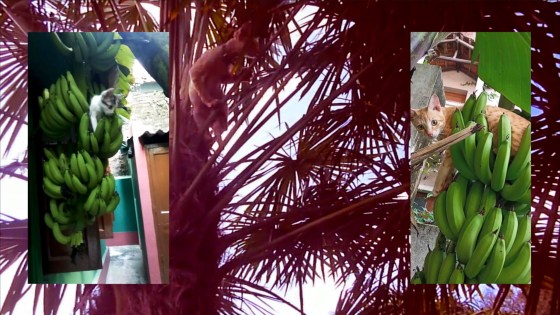
“A sly, sun-soaked detour into cat video territory, refracted through postcolonial critique and pop collage. This winking essay film uses the feline internet genre to unpack tropical aesthetics, exoticism, and identity politics, purring with layered audio, meme logic, and cultural dissection. As playful as it is pointed.”

What may be broadly viewed as benign paintings from dusty art history books point to still-reverberating and repeating histories of colonialism, trade, and sources of European and American wealth through extraction.

Stephanie Syjuco invited nine artists to contribute short essays about their own work with archives to the monograph of her research-based practice, including Pio Abad, Gelare Khoshgozaran, Wendy Red Star, LJ Roberts, Astria Suparak, and Carmen Winant.

As the guest curator for the Film Series, Suparak crafted 1 year of programs around key ideas present in both the museum collection and her own practice, including science fiction and fantasy, architecture, sports, media criticism, diaspora and inheritance.

“This ground-breaking new history of modern art explores the relationship between art and knowledge from the beginning of the 20th century to the present day.”

“This issue of V ART records Thai-American artist Astria Suparak’s long-term research project ‘Asian futures, without Asians.’ She uses precise language like a scalpel cutting through the ‘human beings’ that Hollywood science fiction films and television are keen to depict.”
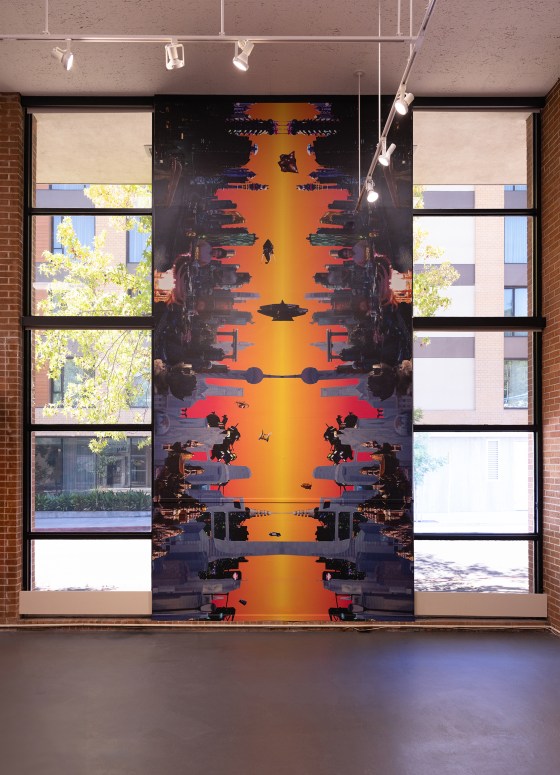
An amalgamated skyline of Asian futures imagined by white filmmakers. Sourced from sci-fi movies and television shows that depict a vice-ridden, dangerous world overtly marked with elements of East, Southeast, and South Asian architecture.

This live cinema work is illustrated with images and clips from futuristic films and TV shows. Accompanied by a live musical soundtrack, Suparak delivers anecdotes, trivia, and documents from the histories of art, architecture, fashion, film, religion, and science.

A set of backdrops containing concepts central to present-day sci-fi and fantasy, highlighting a sliver of the brilliance and beauty of Asian imagination and artistry across six centuries.

“Suparak and the writer and artist Dorothy R. Santos discuss Suparak’s ongoing scholarship, which, in addition to researching historical Asian artifacts that presage contemporary concepts of sci-fi, catalogs the appropriation of Asian objects and tropes in mainstream sci-fi films and television.”

A video essay that takes one of the world-building tics of white science fiction — gratuitous signage in Asian languages — to consider its utopian potential and dystopian applications.

“Asian Futures, Without Asians illuminates the lopsided nature of one Hollywood genre and critiques the way media is concepted to guide audience empathy. Suparak’s [installation] investigates how artificial intelligence is coded in film, and the ways in which sympathetic robots and cyborgs, who are often white, are designed”

Two-week run of “Asian futures, without Asians” at the Museum of Modern Art, New York.

A visual essay and collage on the history and (sci-fi) future of the ancient Asian technology, the conical hat.

Billboard created for For Freedoms by Stop DiscriminAsian.

“Countering invisibility is at the heart of a short film by Astria Suparak titled ‘Virtually Asian.’ It splices together scenes from science fiction movies in which urban landscapes are filled with stereotypical ‘Asian’ signifiers, but the actual characters are almost exclusively white.”

“Suparak’s piece is immediate and her voice, narrating the words, is melodic and compelling. The over-dubbing of her acerbic observations on blockbuster films is a compelling prelude to other iterations of her work that will appear in fragments across digital platforms.”

A short video essay that looks at how white science fiction filmmakers fill the backgrounds of their futuristic worlds with hollow Asian figures while the main cast (if not the entirety of their fictional universe’s population) is devoid of actual Asian people.

“This is a pretty interesting experiment in real-time […] It’s heartening to see such a keen and engaged audience. Lee, Suparak, and Delos Reyes have set up a really successful platform for exchange.” – Hyperallergic

Series of projects, performances, and texts on how white filmmakers envision futures inflected by Asian culture, but devoid of significant Asian people. A visual analysis of 60 years of mainstream science-fiction cinema.

Three-part series with journalists, academics, and cultural producers covering topics like athletic protest, concussions and health issues, and labor and exploitation.

This year-long series of art exhibitions, film programs, discussions, commissioned projects, and other events took place in galleries, cinemas, sports bars, bookstores, and on rooftops from Los Angeles to Washington, D.C.

The first volume of its kind, this double issue examines the intersections of sports, performance, popular culture, and experimental media. Features 41 contributors including artists, writers, critics, scholars, historians, and athletes.
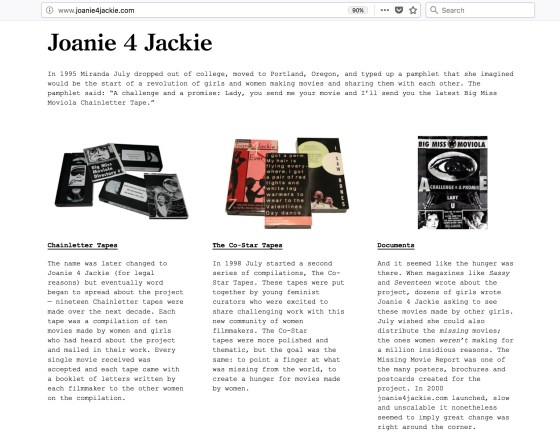
The complete archives of the influential underground film network for female filmmakers has been acquired by The Getty and is now viewable online. A selection of videos is available on the Criterion Channel (2020-Present).

A lexicon of neologisms coining new words for a new age, one marked by advances in omnipresent technology and mass surveillance; a privatization of art, culture, and education; as well as a continued struggle with intersectional issues.

An installation superimposing the goals of six major sports, creating an actual-scale “color field” abstraction.
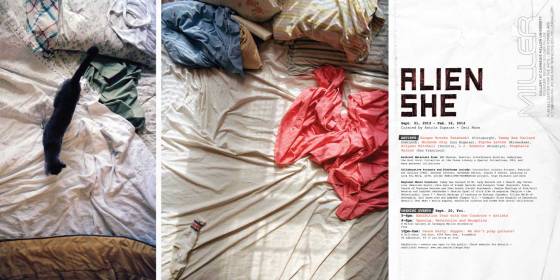
This exhibition provides a view into the passion and diversity of the punk feminist movement Riot Grrrl, and highlights how these ideas have broadened, evolved and mutated in the work of contemporary artists.

The first major gallery exhibition to present sports fanaticism as a significant form of cultural production, bridging the assumed gap between sports and the arts.
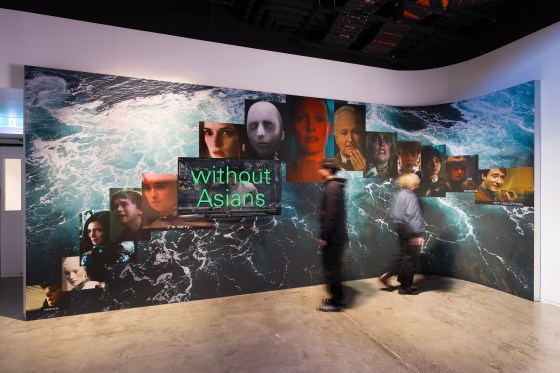
“A collage of Caucasian actors in roles as emotionally complex robots, AIs and cyborgs. [The installation] questions who is granted the privilege of humanity and emotional depth in these techno-futuristic landscapes.”

